

Cloud Computing & DevOps Jobs 2026 | Best $95K–$210K Salary Remote Careers
Cloud Computing & DevOps Jobs ($100K-$180K salary range) are witnessing explosive demand in 2026. Companies are actively seeking talent who can build, automate, and scale modern infrastructure. Every business, from a small startup to a global tech giant, depends on cloud computing and DevOps to stay fast, secure, and competitive. This makes Cloud Computing & DevOps Jobs one of the most lucrative career options in the IT industry today.
A few years ago, cloud computing as a career option was considered too technical for mere mortals. It was a career option for senior IT professionals only. However, today Cloud Computing & DevOps Jobs have created opportunities for freshers too. Cloud computing jobs, DevOps jobs, and site reliability engineering jobs are now accessible to anyone who learns the skills required to succeed in these fields.
What makes Cloud Computing & DevOps Jobs so popular today? The answer is quite simple. The traditional IT infrastructure of the past decade no longer meets today’s business needs. Businesses need to innovate faster, need zero downtime, need scalability, and need robust security. This is where cloud computing and DevOps professionals come in. These are the brains behind the infrastructure of millions of websites, applications, SaaS tools, and AI tools used by millions of users across the globe.
This is no ordinary trend in the tech industry. Cloud computing and DevOps are the backbone of modern digital businesses. Whether you are into e-commerce, fintech, healthcare, AI, or something else, Cloud Computing & DevOps Jobs are the foundation of every business.
What does this mean for you as a job seeker? This means you are about to land one of the most lucrative career options out there. You will learn everything about Cloud Computing & DevOps Jobs, salary range, top jobs, skills required, certification options, and step-by-step strategies to get hired in Cloud Computing & DevOps Jobs.

What Are Cloud Computing & DevOps Jobs
Jobs in Cloud Computing & DevOps are those jobs that are associated with building, managing, automating, deploying, monitoring, and improving digital infrastructures. In other words, jobs in Cloud Computing & DevOps are those that assist businesses in running their applications on cloud platforms.
Cloud computing is more associated with infrastructure, services, networking, storage, security, and scalable resources on the cloud. DevOps is more associated with speed, collaboration, automation, deployment pipelines, monitoring, and improving the development life cycle.
These two terms are now more associated with each other. In other words, in most organizations, one team handles cloud infrastructure, CI/CD pipelines, containers, server automation, monitoring, and improving the overall system. As a result, Cloud Computing & DevOps Jobs are more associated with each other.
A person in this field is associated with:
-
Deploying applications to cloud platforms
-
Setting up servers, containers, and Kubernetes clusters
-
Automating infrastructure using Infrastructure as Code
-
Managing CI/CD pipelines for faster releases
-
Monitoring systems and preventing downtime
-
Improving performance, reliability, and security
-
Reducing cloud costs and resource waste
-
Supporting developers with better engineering workflows
These are all associated with each other, so this field is more associated with both theory and practical application. In other words, this field is more associated with practical application because a person in this field is more associated with ensuring that a system is always up, fast, scalable, and secure. If you enjoy building systems from the ground up, you might also want to explore Software Development & Engineering Jobs, especially if you’re deciding between writing code and managing infrastructure.

Why Cloud Computing & DevOps Jobs Are Growing So Fast in 2026
The first reason for the growth of Cloud Computing & DevOps jobs is that companies are becoming digital, global, and cloud-dependent in nature.
Nowadays, companies are looking for products that can be launched quickly, support a large number of users without any problems, and are not prone to expensive downtime. Cloud and DevOps professionals are the ones who are resolving these problems for companies.
Additionally, the emergence of various software-as-a-service companies, remote work, online education, digital banking, AI, e-commerce, mobile apps, and many such companies has increased the demand for Cloud and DevOps jobs. This is because almost every industry in the world is using cloud software, data, and operations, and companies, especially non-technical ones, are in dire need of these services.
The second reason for the growth of Cloud and DevOps jobs is automation. Companies are not looking for slow, manual deployments anymore. They are looking for repeatable, testable, and secure workflows, and this is what DevOps is all about.
One of the key reasons for the growth of Cloud and DevOps jobs is that these jobs are not done once, as cloud infrastructure has to be maintained, optimized, secured, and scaled, which is a continuous process. As cloud adoption grows, security becomes just as important as performance. This is why many professionals also explore Cybersecurity & Information Security Jobs to understand how to protect systems and prevent real-world threats.
Average Salary for Cloud Computing & DevOps Jobs in 2026
One of the most compelling reasons why people are shifting their focus to this domain is the compensation.
Here is a realistic salary overview for Cloud Computing & DevOps Jobs in 2026:
- Entry-level cloud support/Junior DevOps: $65,000 – $95,000
- Cloud engineer/DevOps engineer: $95,000 – $140,000
- Mid-level platform engineer/SRE/Infrastructure engineer: $120,000 – $165,000
- Senior cloud architect/senior DevOps engineer: $150,000 – $210,000+
- Specialized cloud security/principal platform engineer: $180,000 – $250,000+
The salary is based on various criteria:
-
Your hands-on skills
-
Your cloud platform expertise
-
Whether you know Kubernetes and Terraform
-
Your ability to automate workflows
-
Industry and company size
-
Remote vs local role
-
Your experience with production environments
Individuals with practical experience tend to advance faster in this domain than individuals with theoretical knowledge. Employers are particularly interested in knowing whether you can actually build pipelines, troubleshoot deployments, automate workflows, etc.

Types of Cloud Computing & DevOps Jobs
There are no job titles in this area. The lack of job titles is actually good news because this means more ways to get started and more opportunities.
Cloud Engineer
A cloud engineer is responsible for creating and maintaining infrastructure on the cloud using platforms like AWS, Azure, or Google Cloud.
DevOps Engineer
A DevOps engineer is responsible for automation, continuous integration, continuous deployment, and release pipelines.
Site Reliability Engineer (SRE)
An SRE is responsible for the reliability and uptime of the system.
Platform Engineer
A platform engineer is responsible for creating infrastructure within the company that can make the lives of developers easier by creating platforms that make development easier.
Infrastructure Engineer
An infrastructure engineer is responsible for the infrastructure that runs the applications.
Cloud Architect
A cloud architect is responsible for the design of the cloud infrastructure at a higher level than the cloud engineer.
Release Engineer
A release engineer aids in the management of the software release process.
Cloud Security Engineer
This is an area of concern for cloud computing and DevOps jobs.
Skills You Need to Get Into Cloud Computing & DevOps Jobs
In this field, skill-building is key. While you do not need to be good at everything, you do need to be good at some things.
1. Linux Fundamentals
Linux is still one of the key things you should be good at for Cloud Computing & DevOps Jobs. The key things you should be good at include:
- File Systems
- Permissions
- Processes
- Networking Fundamentals
- Shell Commands
- System Logs
- Package Management
2. Cloud Platforms
In general, having experience with at least one of these key players is essential:
- AWS
- Microsoft Azure
- Google Cloud Platform
3. Scripting and Automation
In DevOps, automation is key. While you do not need to be a software engineer, you should be good at scripting. At least one of these should be your scripting language of choice:
- Bash
- Python
- PowerShell
You do not need to be a software engineer first.
4. CI/CD Tools
You should know about the process of how the code moves from the repository into the environment of testing and production. The following tools are useful:
- GitHub Actions
- GitLab CI/CD
- Jenkins
- CircleCI
- Azure DevOps
5. Containers and Kubernetes
Containers are now an essential component of many software engineering teams. You should know:
- Docker
- Container basics
- Images, registries
- Kubernetes basics
- Pod, Deployment, Service, Ingress
6. Infrastructure as Code
This is an area that is a major hiring advantage. The following tools are useful:
- Terraform
- AWS CloudFormation
- Pulumi
Terraform is one of the most useful skills that could improve your employability in Cloud Computing & DevOps Jobs.
7. Monitoring and Observability
You should know about the health of the system and the ability of the company to quickly spot the problem. The following tools are useful:
- Prometheus
- Grafana
- Datadog
- New Relic
- ELK Stack
8. Networking and Security Basics
You should know about the following:
- DNS
- Load Balancers
- Firewalls
- VPNs
- IAM permissions
- Secrets management
- SSL/TLS basics.Cloud platforms are also heavily used in handling large-scale data. That’s why many learners combine this path with Data Science & Data Analytics Jobs to work with data pipelines and analytics systems.
Best Certifications for Cloud Computing & DevOps Jobs
While certifications alone may not get you hired, they may help if combined with your projects.
Good options:
- AWS Certified Cloud Practitioner
- AWS Certified Solutions Architect – Associate
- Microsoft Azure Fundamentals
- Microsoft Azure Administrator Associate
- Google Associate Cloud Engineer
- HashiCorp Terraform Associate
- Certified Kubernetes Application Developer
- CKA
A good strategy is to pick a cloud provider and go deeper instead of collecting multiple beginner certifications.
For official learning paths and cloud documentation, consider using the following as external authority references:
Do You Need a Degree for Cloud Computing & DevOps Jobs?
No, not always.
While many companies are still interested in computer science, information technology, and related degrees, Cloud Computing & DevOps Jobs are arguably some of the skill-oriented jobs in the tech field. This does not mean that you are at a loss if you don’t have a related degree, especially in a startup, remote work, or small engineering teams, or contract work.
What matters the most is whether you are able to show that you have a solid understanding of actual infrastructure work.
This includes things such as:
- Building a CI/CD pipeline
- Deploying an application on AWS
- Using Terraform for resource provisioning
- Creating Docker containers
- Setting up monitoring dashboards
- Writing scripts for automation
- Explaining how you solved a production problem
A person with a solid portfolio and good technical communication skills can definitely compete without a traditional degree.
Are Cloud Computing & DevOps Jobs Good for Remote Work?
Yes, very good.
Cloud Computing & DevOps Jobs are arguably some of the best remote work options in the tech field, as the work itself is done online. This is because engineers work on cloud infrastructure, which is done entirely online, and they communicate with team members, clients, and teams using various tools and software, rather than being in a traditional office environment.
This is why many companies are looking for fully remote or hybrid work teams for jobs such as:
- Cloud Engineer
- DevOps Engineer
- SRE
- Platform Engineer
- Infra Automation Specialist
- Cloud Security Engineer
Many people comparing modern tech careers also look into Artificial Intelligence & Machine Learning Jobs & Cybersecurity & Information Security Jobs, since both paths offer strong salaries, remote flexibility, and long-term growth.

How Beginners Can Start Learning Cloud Computing & DevOps
The biggest reason people don’t start is that it seems overwhelming. However, the truth is that you don’t have to learn everything in one week. You simply have to have a way to start. Here is a way that beginners can start:
Step 1: Learn Linux and Networking Fundamentals
Start with command line basics, networking, permissions, file systems, and server operations.
Step 2: Learn Git and GitHub
Learning the basics of version control is important because most DevOps practices involve code repositories, branching, automation scripts, and code collaboration.
Step 3: Pick One Cloud Platform
Pick one of the three: Amazon Web Services (AWS), Microsoft Azure, and Google Cloud Platform (GCP). Learn the basics of one cloud provider so that you can deploy something in the cloud.
Step 4: Learn Docker
Learn the basics of Docker so that you can build an application in a container and understand how applications are delivered and deployed in the cloud.
Step 5: Learn CI/CD
Learn the basics of Continuous Integration and Continuous Deployment so that you can build a CI/CD pipeline that can automatically deploy code.
Step 6: Learn Terraform
Learn the basics of infrastructure as code using Terraform so that you can provision infrastructure automatically instead of manually.
Step 7: Build 2-3 Real Projects
This is where you become employable.
Portfolio Projects That Help You Get Hired Faster
Employers love proof. Here are strong beginner-to-mid-level project ideas for Cloud Computing & DevOps Jobs:
Project 1: Static Website on AWS
Host a static website with cloud storage, CDN, and DNS.
Project 2: Dockerized Web App
Containerize a simple web app with Docker.
Project 3: CI/CD Pipeline
Automate tests and deployments with GitHub Actions or Jenkins.
Project 4: Terraform Infrastructure
Automate cloud infrastructure with code.
Project 5: Kubernetes Demo App
Deploy a small web app to Kubernetes and demonstrate scaling.
Project 6: Monitoring Dashboard
Monitor resources with Grafana and Prometheus.
Project 7: Cost Optimization Case Study
Demonstrate cost optimization strategies.
These projects make you more attractive to potential employers because you demonstrate you can actually do the work of a Cloud Computing & DevOps role, rather than just memorizing concepts.
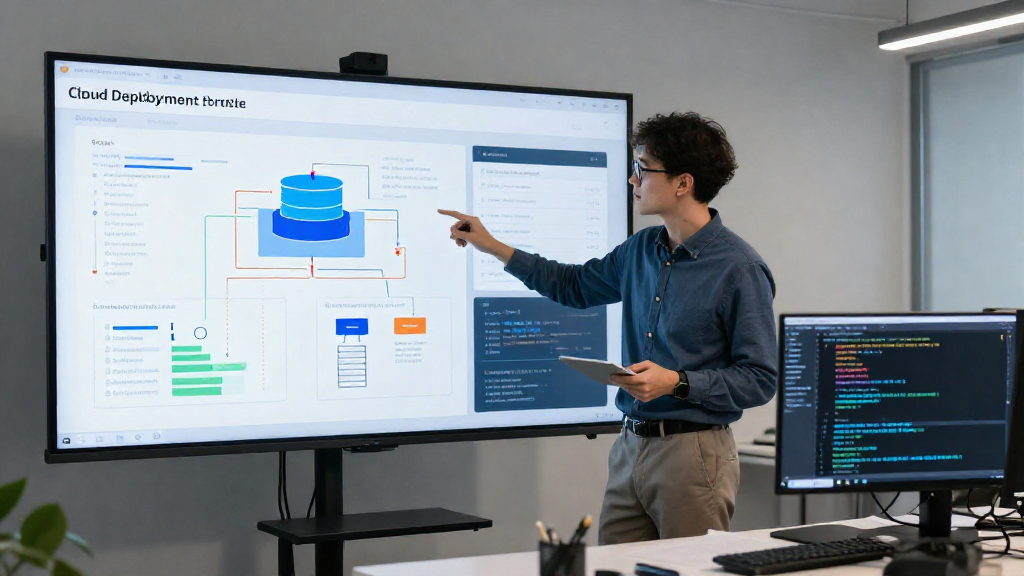
Common Interview Topics for Cloud Computing & DevOps Jobs
Be prepared to answer questions such as:
- What is the difference between CI and CD?
- What problem does Docker solve?
- What is Kubernetes’ value proposition with regard to managing deployments?
- What is Infrastructure as Code?
- How do you handle secrets in a deployment pipeline?
- What steps would you take to minimize downtime during releases?
- What steps would you take if your production system failed?
- What is a load balancer?
- Why is monitoring so important in DevOps?
- How would you make your cloud-based system more secure and more cost-efficient?
Be prepared to answer scenario-based questions as well. These questions are very important because they will put your problem-solving skills under a microscope.
Challenges in Cloud Computing & DevOps Jobs
If you are considering a job in this field, know that it is a lucrative one but not “easy money.”
The biggest challenges in this field are:
- Rapidly changing tools and platforms
- On-call situations
- Responsibility for uptime
- Troubleshooting
- Speed vs. security vs. stability
- Managing cloud costs without sacrificing performance
If you are someone who enjoys problem-solving, then this is a very rewarding field. It is one of those fields that has tangible effects on your life right away.
Career Growth Path in Cloud Computing & DevOps Jobs
The main reason why one should go into this field is that the career path is clear.
The path is as follows:
- IT support/Junior sys admin/Cloud support
- Junior cloud engineer/Junior DevOps engineer
- Cloud engineer/DevOps engineer
- Senior DevOps engineer/SRE/Platform engineer
- Cloud architect/Principal infrastructure engineer/Engineering manager
There is also a chance to specialize in various areas, such as:
- Cloud security
- FinOps/Cloud cost optimization
- Platform engineering
- Reliability engineering
- DevSecOps
- Kubernetes consulting
- Solutions architecture
Because of this, Cloud Computing & DevOps Jobs is a wise long-term career path rather than just a fleeting short-term trend.

Who Should Choose Cloud Computing & DevOps Jobs
The following individuals should choose this path:
- Individuals who like problem-solving
- Individuals who like automation
- Individuals who want a high-income job that can be done remotely
- Individuals who prefer infrastructure work rather than just frontend
- Individuals who like building the engine behind the product rather than just building the product
- Individuals who want a future-proof skill set
- Individuals who like knowing how software is run in the real world
If one likes building the engine behind the product rather than just building the product, then one will genuinely love this field.
Career Growth Path in Cloud Computing & DevOps Jobs
The main reason why one should choose this field is that the career growth path is clear.
The career growth path is as follows:
- IT support/Junior sys admin/Cloud support
- Junior cloud engineer/Junior DevOps engineer
- Cloud engineer/DevOps engineer
- Senior DevOps engineer/SRE/platform engineer
- Cloud architect/Principal infrastructure engineer/Engineering manager
There is also a chance for specialization in various areas, such as:
- Cloud security
- FinOps/Cloud cost optimization
- Platform engineering
- Reliability engineering
- DevSecOps
- Kubernetes consulting
- Solutions architecture
Because of this, Cloud Computing & DevOps Jobs is a wise long-term career growth path rather than a fleeting short-term trend.
Who Should Choose Cloud Computing & DevOps Jobs
The following are the individuals who should choose this field:
- Individuals who like problem-solving
- Individuals who like automation
- Individuals who want a high-paying job that can be done remotely
- Individuals who prefer infrastructure work rather than just frontend
- Individuals who like building the engine behind the product rather than just building the product
- Individuals who want a future-proof skill set
- Individuals who like knowing how software is run in the real world
If an individual likes building the engine behind the product rather than just building the product, then that individual will genuinely love this field.
Is Cloud Computing & DevOps a Good Career in 2026
Yes, this is one of the best tech career growth paths available in the world today.
The reason why this is one of the best is that Cloud Computing & DevOps Jobs pay well, can be done remotely, are in demand worldwide, and are required in various industries.
The reason why this is one of the best is that it is one of the few fields that reward both learning and doing.
If an individual wants a future-proof career with high demand, then this is one of the smartest paths to take.
If your main goal is building a remote income stream, you should also explore Remote AI Jobs UK & USA, especially when comparing high-paying online career options.
Conclusion
Cloud Computing & DevOps Jobs are not just some exotic backend programming jobs that only a handful of people know about. These jobs are the very fabric of how modern companies build, deliver, and protect their digital assets today. Hence the constant growth in these jobs and the associated remuneration.
The best part of all this is that this field still has room for new entrants to join in. It does not require that you be an expert in all the cloud services or automation tools out there. All it needs is that you have an idea of the roadmap, projects, and the willingness to learn.
If you want to build some hands-on experience in Linux, cloud services, Docker, CI/CD, Terraform, and monitoring, you would be able to build a very strong platform for your career, which promises flexibility, growth, and security.
For those readers looking to build authority in other high-growth jobs, you could also connect this topic with
Frequently Asked Questions
What does Cloud Computing & DevOps Jobs do?
Cloud Computing & DevOps Jobs are concerned with the management of cloud infrastructure, automation of deployments, and ensuring the reliability of systems, as well as helping businesses scale applications efficiently.
Are Cloud Computing & DevOps Jobs well-paying?
Yes, Cloud Computing & DevOps Jobs are well-paying, with the jobs paying as much as $210,000 or as little as $95,000, depending on the experience and expertise in the field.
Can beginners join the Cloud Computing & DevOps field?
Yes, beginners can join the field, as they can learn the necessary concepts, including Linux, cloud, Docker, CI/CD, and infrastructure automation, as well as build portfolio projects.
Are Cloud Computing & DevOps Jobs remote?
Yes, the jobs in Cloud Computing & DevOps are mostly done remotely, as the operations are carried out online through the cloud.
What kind of certification would be best for Cloud Computing & DevOps Jobs?
Some of the best certifications for the field include the AWS Certified Cloud Practitioner, AWS Solutions Architect Associate, Azure Fundamentals, Google Associate Cloud Engineer, and Terraform Associate certifications.