The Remote Revolution in AI Careers: Navigating the Future of Work

Introduction: The Remote Revolution in AI Careers
The way we work is undergoing a profound transformation, and at the heart of this shift lies the convergence of artificial intelligence (AI) and remote work. Once considered a temporary perk, remote work has become a permanent fixture in many industries, allowing professionals to work from anywhere in the world. This flexibility has kept pace with the explosive growth of AI, creating unprecedented demand for remote AI jobs. Companies are increasingly built on remote-first principles, seeking to recruit top AI talent regardless of geographical boundaries. This dynamic duo—AI and remote work—is not just a passing trend; it’s a fundamental redefinition of careers, offering new opportunities for innovation, productivity, and a more balanced work-life. As AI tools become integral to daily operations, from content creation to data analysis and customer support, the ability to leverage these technologies effectively from a distance is becoming a core competency.

The UK and the US are leading the surge in remote AI job demand. Professionals exploring broader opportunities can also review Tech & AI Jobs and compare roles across industries.
The Dual Edge of Remote AI Work: Benefits and Challenges
The rise of remote AI work presents both exciting advantages and distinct hurdles that professionals and organisations must navigate. Understanding these dual edges is crucial for thriving in this evolving landscape.
Benefits of Remote AI Work
Remote AI jobs offer a compelling package of benefits that appeal to a broad range of professionals:
- Flexibility and Work-Life Balance: One of the most significant advantages is the freedom to structure your workday to fit personal commitments, leading to improved work-life balance. This flexibility allows individuals to set up their office anywhere, whether at home or in a co-working space.
- Access to a Global Job Market: Remote work breaks down geographical barriers, opening up a global talent pool for companies and expanding career opportunities for individuals. Professionals are no longer limited to local positions, gaining access to diverse roles across cities, countries, and even continents.
- Cost Savings: Working from home can lead to substantial financial savings. Employees can cut down on commuting expenses, work attire, and daily costs like lunch and coffee, which can accumulate significantly over time.
- Increased Productivity: Studies indicate that remote and hybrid workers often report higher productivity levels. For instance, 84% of employees noted more productivity when working in hybrid or remote roles. AI tools further enhance this by automating mundane tasks, allowing employees to focus on more complex, satisfying aspects of their jobs. AI-driven productivity tools can analyse work habits, leading to tailored project management solutions that boost overall performance.
- Environmental Impact: Remote and hybrid work can contribute positively to the environment by reducing carbon footprints. Remote work can lower emissions by 54%, while hybrid models can reduce them by 11-29%.

Remote AI jobs offer flexibility, cost savings, and higher productivity. This growth is driven by the increasing adoption of AI across various industries, from tech giants to finance, healthcare, and fashion. AI innovation is especially accelerating in Finance, Banking & Compliance Jobs and Healthcare & Medical Jobs, where automation, predictive analytics, and AI-driven risk systems are transforming operations.
Challenges of Remote AI Work
Despite the numerous benefits, remote AI work comes with its own set of challenges that require proactive strategies:
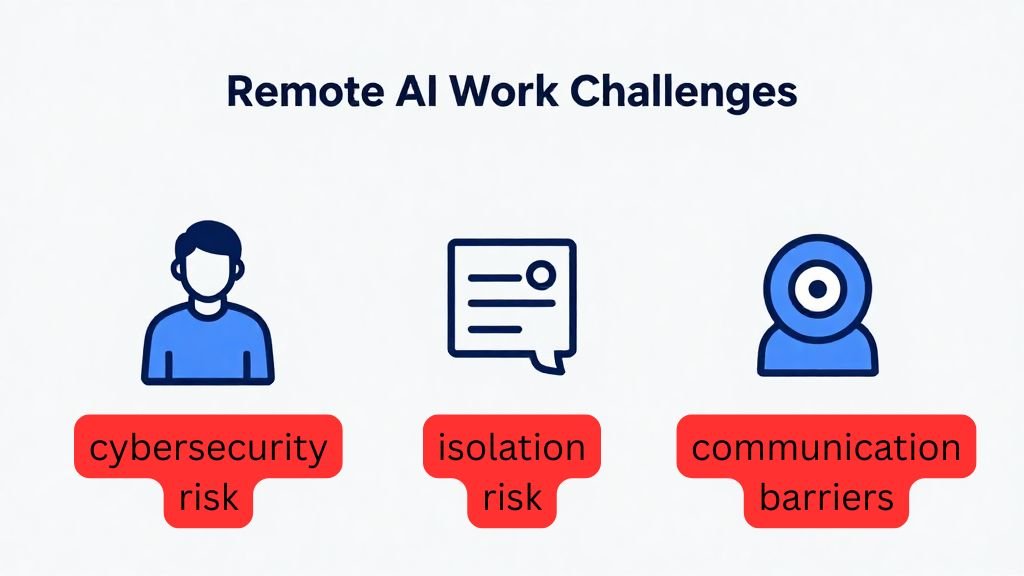
- Communication Barriers and Collaboration Issues: Dispersed teams can face difficulties in communication and collaboration across different time zones and cultures. Miscommunication can lead to productivity dips and a lack of oversight.
- Mental Health Impacts: Remote employees may experience feelings of isolation or disconnection from colleagues, impacting their well-being.
- Cybersecurity Risks: The expanded use of AI and remote setups necessitates closer attention to cybersecurity. Distributed data and remote access can increase security risks.
- Job Transformation vs. Displacement: While AI creates new roles, it also transforms existing ones, and some repetitive entry-level tasks may be automated. This can lead to anxiety about job displacement, although the overall trend is more about job transformation and augmentation.
- Over-reliance and Bias in AI: Teams risk losing human problem-solving skills if they depend too heavily on AI agents. Additionally, AI decisions can perpetuate existing biases if not carefully monitored.
- Measuring Efficiency: Accurately measuring the efficiency and productivity of remote teams can be challenging, though AI can provide valuable insights through data analysis and KPIs.
To illustrate these points, consider the following table:
Aspect: Benefits of Remote AI Work: Challenges of Remote AI Work:
Work-Life: Enhanced flexibility and better work-life balance.Potential for isolation and mental health impacts.
Career Growth: Access to a global job market and diverse opportunities. Need for continuous upskilling to adapt to rapidly evolving AI technologies.
Productivity: Increased productivity through automation of mundane tasks and AI-driven insights.Communication barriers and collaboration issues across distributed teams.
Financial: Significant cost savings on commuting and daily expenses.Potential for job transformation or displacement in highly repetitive roles.
Technological Risk: AI-powered tools enhance efficiency and decision-making. Cybersecurity concerns and risks with distributed data—over-reliance on AI and potential for bias.
The Exploding Market for Remote AI Talent
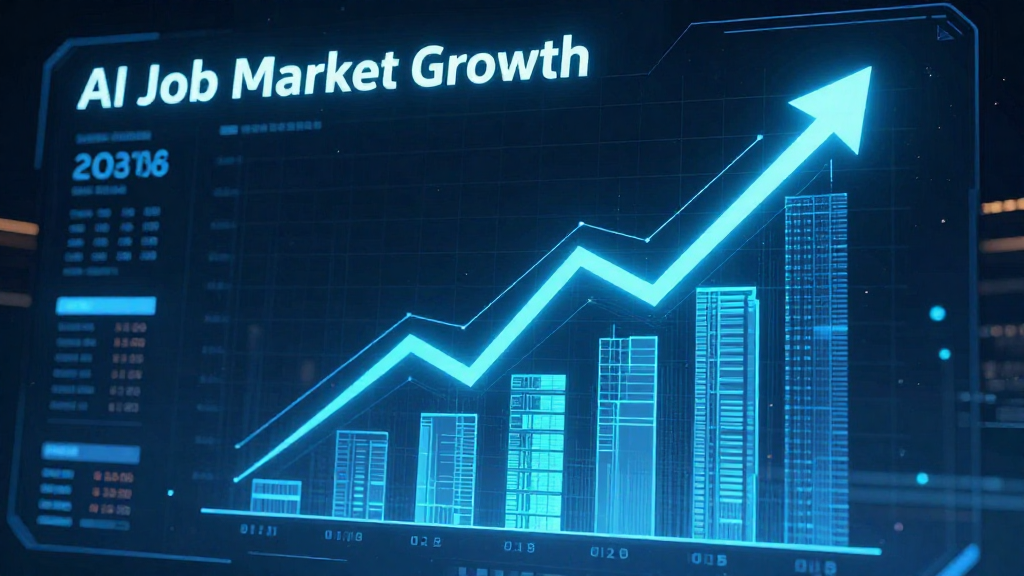
The demand for remote AI jobs is experiencing an unprecedented surge, reshaping the global job market. AI-related jobs were three times more likely to offer remote work options in a 2025 study, highlighting a significant shift in hiring practices. Remote AI jobs currently constitute 8.6% of all AI job postings. This growth is driven by the increasing adoption of AI across various industries, from tech giants to finance, healthcare, and fashion.
The global AI market is projected to reach $267 billion by 2027, according to data published by Statista. This expansion directly translates into a booming job market. Job listings requiring AI skills surged by 130% over two years, with generative AI roles alone seeing an astonishing 1300% increase in demand within the same period. Machine learning and data science roles have also experienced significant growth, at 80% and 250% respectively. The US Bureau of Labour Statistics projects a 23% increase in AI-related jobs over the next decade.
Beyond AI-specific roles, related technical opportunities are also rising in Tech & AI Jobs as companies invest heavily in automation, cybersecurity, and cloud systems.
In-Demand Remote AI Roles and Salaries
The market offers a wide array of remote AI jobs with competitive salaries reflecting the high demand for specialised skills. Average US AI salaries generally range from $109,143 to $168,803, with top roles earning significantly more.
Here’s a glimpse at some key remote AI roles and their average annual salaries in the US:
AI Job RoleAverage Annual Salary (US)Salary Range (US)
- AI Engineer $160,757 $180,000 – $250,000
- Machine Learning Engineer $109,143 $120,000 – $200,000
- Computer Vision Engineer $168,803
- Data Scientist $157,000
- AI Research Scientist $115,443 $171,630 – $250,000+
- Remote AI Engineer $109,615 $84,000 – $132,000
- AI Consultant $120,000 – $200,000
Note: Salary figures can vary significantly based on experience, location, industry, education, and specific AI speciality. For instance, an AI Engineer with 7+ years of experience averages $191,380.
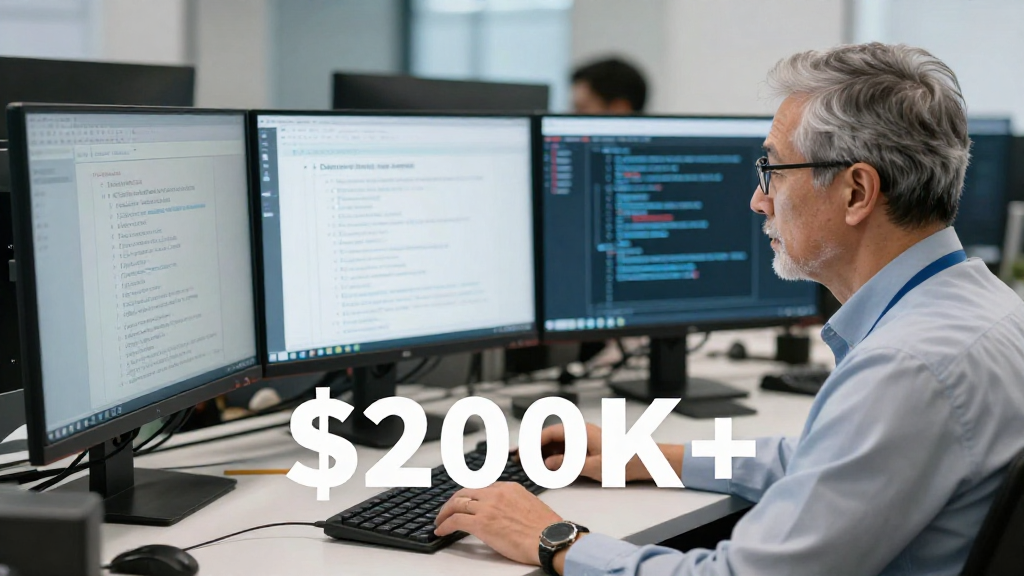
Companies like OpenAI are known for offering exceptionally high salaries, with an average of $440,000, and some tech professionals earn up to $650,000. Major global tech firms and startups like Turing, XAI, Twilio, Reddit, and Motional are actively hiring for remote AI positions, alongside growing numbers in fintech, healthcare, and mobility sectors.
Studies and industry research from organisations like Gartner indicate that remote and hybrid workers often report higher productivity levels.
Many global employers are actively recruiting through Remote & Visa Sponsorship Jobs for professionals seeking location flexibility or international relocation pathways.
Cultivating a Remote AI Career: Essential Skills and Future Trends
To succeed in the burgeoning field of remote AI jobs, professionals must cultivate a blend of technical prowess and crucial soft skills, while also staying abreast of future trends.
Essential Skills for Remote AI Careers
While specific technical requirements vary by role, several core competencies are consistently in high demand for remote AI positions:
- Programming Proficiency: Strong skills in languages like Python and R are often required for most entry-level AI jobs. Familiarity with Java, C++, or SQL can also be advantageous.
- Machine Learning Fundamentals: A solid understanding of basic machine learning algorithms, data analysis, and statistical concepts is expected. Knowledge of frameworks like TensorFlow or PyTorch is also highly valued.
- Data Modelling and Processing: The ability to work with and manipulate large datasets is critical for uncovering patterns and insights. This includes data acquisition, visualisation, and an understanding of data quality control.
- AI Literacy and Prompt Engineering: You don’t necessarily need to be a machine learning engineer, but understanding how AI tools can improve your workflow is becoming a fundamental requirement. Prompt engineering, the skill of crafting effective inputs for AI models, is now appearing across various functions like HR, marketing, sales, and consulting.
- Automation and Process Thinking: Employers are seeking individuals who can automate workflows, integrate tools, and eliminate manual bottlenecks, often using AI and automation tools.
- Problem-Solving and Critical Thinking: Strong analytical and critical thinking skills are essential for tackling AI-related tasks and coding challenges.
- Communication and Collaboration: Effective communication is paramount in remote environments, especially for collaborating with distributed teams and stakeholders. Clear written communication, in particular, is an irreplaceable skill for remote workers.
- Adaptability and Continuous Learning: The AI landscape evolves rapidly, making continuous learning and staying updated on industry trends absolutely necessary. Professionals who embrace new technologies rather than fear them will be most successful.
- Creativity and Innovation: Beyond technical skills, employers value creativity and innovation, particularly in roles that involve directing AI outputs and refining them into usable solutions.

Strong programming and machine learning fundamentals remain critical.
Future Trends in Remote AI Jobs
The future of remote AI jobs is dynamic, with several trends shaping the landscape:
- Emergence of New AI-Assisted Roles: We will see continued growth in specialised roles that work alongside AI systems. These include AI prompt engineers, AI workflow designers, AI chatbot trainers, AI ethics leads, and “human in the loop” validators. These roles often sit at the intersection of technical and creative, where humans guide and refine AI outputs.
- AI-Native Companies and Hybrid Human-AI Teams: Entire organisations may be built around AI agent-driven workflows, and human-AI collaboration will become the norm, with both acting as equal partners.
- Global Talent Marketplaces and Virtual Reality Workspaces: AI agents are expected to match skills with opportunities in real-time across global talent marketplaces. Virtual reality workspaces powered by AI assistants could create immersive remote environments.
- Increased Focus on AI Governance and Ethics: As AI adoption grows, roles focused on ensuring responsible, ethical, and compliant use of AI will become increasingly important.
- Upskilling and Reskilling as a Continuous Process: The pace of skill change in AI-exposed jobs is significantly faster than in other roles. This necessitates a continuous commitment to upskilling and reskilling through online courses, certifications, and practical projects to remain competitive.

Future of remote AI jobs with human and AI collaboration Conclusion: Thriving in the Global Remote AI Landscape
The landscape of remote AI jobs is rapidly expanding, offering unprecedented opportunities for professionals worldwide. We are witnessing a fundamental shift where AI is not merely a tool but a transformative force redefining how and where we work. The benefits of remote AI careers—from unparalleled flexibility and global access to talent pools to enhanced productivity and cost savings—are compelling.
However, navigating this new frontier also requires addressing challenges such as maintaining effective communication, fostering team collaboration across distances, and mitigating the risks associated with cybersecurity and potential AI biases. The market clearly shows a booming demand for AI talent, with roles in generative AI, machine learning, and data science experiencing exponential growth and commanding competitive salaries.
To thrive in this evolving environment, we must embrace continuous learning and develop a robust skill set that combines technical expertise in programming and machine learning with crucial soft skills like prompt engineering, automation literacy, critical thinking, and effective communication. The future promises even more innovative AI-assisted roles and hybrid human-AI teams, underscoring the need for adaptability and a forward-thinking mindset. By proactively developing these skills and understanding emerging trends, we can confidently secure our place and excel in the dynamic and rewarding world of remote AI careers.

Thriving in global remote AI careers UK and the US
Frequently Asked Questions (FAQ)
Do I need a technical background or coding knowledge to get an AI remote job?
Not necessarily for all roles. While programming skills (Python, R) are essential for many AI development jobs, many AI-assisted remote roles prioritise practical skills like prompt engineering, AI-supported productivity, content creation, and data literacy over extensive coding knowledge. However, for roles like AI Engineer or Machine Learning Engineer, programming proficiency is usually required.
What are the highest-paying remote AI jobs?
Roles such as AI Engineer, Machine Learning Engineer, Computer Vision Engineer, and AI Consultant consistently command high salaries. Top performers in these fields, especially with significant experience, can earn upwards of $200,000 annually, with some exceptional cases reaching $650,000 at leading AI companies.
How is AI impacting remote work productivity?
AI is significantly boosting remote work productivity by automating mundane and repetitive tasks like scheduling, report generation, and customer service queries. AI-driven tools can also enhance communication, facilitate teamwork, and provide insights into performance, allowing human workers to focus on more complex and creative challenges.
Will AI replace remote jobs?
It’s unlikely that AI will replace remote jobs entirely. Instead, AI is transforming jobs, automating tasks within roles, and creating new ones. While some entry-level or highly repetitive tasks may be automated, human skills like creativity, critical thinking, strategic judgment, leadership, and empathy remain irreplaceable. The future leans towards collaboration between humans and AI.
What are the best ways to find remote AI jobs?
Leverage AI-driven job platforms, optimise your resume with AI tools, enhance your online presence (e.g., LinkedIn), upskill with AI-powered learning platforms, and network with professionals in the field. Websites like AIJobs.ai, Remotech AI, NoDesk, and Remote100K are dedicated to remote AI and ML opportunities.